
Entiende Tu Mente
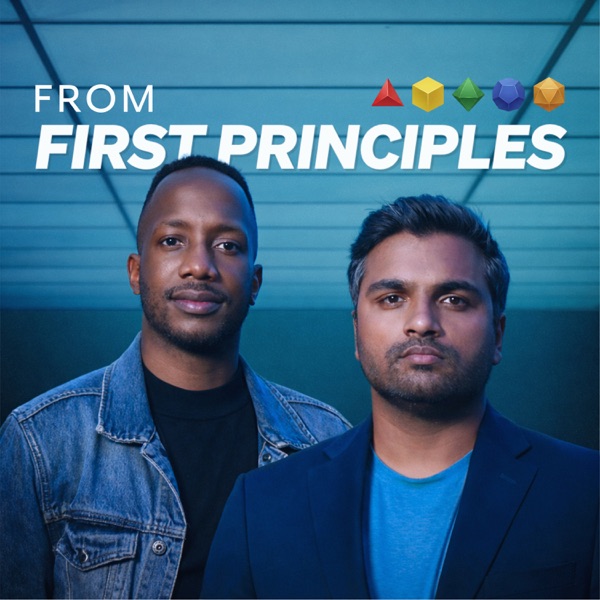
What happens when AI moves beyond the chatbot and into the laboratory? From Claude-designed proteins that bind scorpion toxins to robots that assemble optics experiments, we examine what AI can do for science and what still has to be proven in the real world. Lester Nare and Krishna Choudhary explore the gap between generating a promising design and demonstrating that it works. We also unpack BrainChat, a research platform that lets epilepsy patients interact with their brain-recording data and contribute feedback to seizure detection, and a 15-year study of orangutan mothers facilitating playdates for their young. Along the way: why binding a toxin is not the same as neutralizing it, how patient feedback can help personalize models, and what cloud laboratories and automated experiments could mean for scientific discovery. Which part of science do you think AI will change most? CHAPTERS 00:00 Playdates, brain data and robot labs 00:29 Hello Internet and Signal Award celebration 02:40 Orangutan mothers and…
What happens when AI moves beyond the chatbot and into the laboratory? From Claude-designed proteins that bind scorpion toxins to robots that assemble optics experiments, we examine what AI can do for science and what still has to be proven in the real world. Lester Nare and Krishna Choudhary explore the gap between generating a promising design and demonstrating that it works. We also unpack BrainChat, a research platform that lets epilepsy patients interact with their brain-recording data and contribute feedback to seizure detection, and a 15-year study of orangutan mothers facilitating playdates for their young. Along the way: why binding a toxin is not the same as neutralizing it, how patient feedback can help personalize models, and what cloud laboratories and automated experiments could mean for scientific discovery. Which part of science do you think AI will change most? CHAPTERS 00:00 Playdates, brain data and robot labs 00:29 Hello Internet and Signal Award celebration 02:40 Orangutan mothers and…
What happens when AI moves beyond the chatbot and into the laboratory? From Claude-designed proteins that bind scorpion toxins to robots that assemble optics experiments, we examine what AI can do for science and what still has to be proven in the real world. Lester Nare and Krishna Choudhary explore the gap between generating a promising design and demonstrating that it works. We also unpack BrainChat, a research platform that lets epilepsy patients interact with their brain-recording data and contribute feedback to seizure detection, and a 15-year study of orangutan mothers facilitating playdates for their young. Along the way: why binding a toxin is not the same as neutralizing it, how patient feedback can help personalize models, and what cloud laboratories and automated experiments could mean for scientific discovery. Which part of science do you think AI will change most? CHAPTERS 00:00 Playdates, brain data and robot labs 00:29 Hello Internet and Signal Award celebration 02:40 Orangutan mothers and…
Can light restore aspects of sight? Can recalling a cold experience change an animal's metabolism? And what can ghost particles and mirror-image molecules tell us about the universe? Lester Nare and Krishna Choudhary follow up on our 2026 Nobel Prize episodes with research building on optogenetics, IceCube and molecular handedness. We unpack an early human vision-restoration trial, cold-memory experiments in mice, cosmic neutrino flavors, and a tiny electrical sensor for distinguishing left- and right-handed amino acids. Plus: how the Nobels work, our follow-up on the Nobel chemistry illustration, a brief look at neutrino Earth tomography, and why fundamental research matters. Which discovery would you like us to explore next? CHAPTERS 00:00 Cold open: memory, neutrinos and mirror molecules 00:28 Hello Internet and how the Nobels work 04:32 Optogenetics recap 10:23 Restoring aspects of vision 25:43 Controlling movement in worms 29:31 Cold memories and metabolism 41:07 Memory, trauma and ethical questions…
Why does life favor one molecular mirror image? The 2026 Nobel Prize in Chemistry honors Henri B. Kagan and Kenso Soai for nonlinear effects and autocatalysis in asymmetric organic synthesis. Lester Nare and Krishna Choudhary unpack the science from first principles: chirality, Pasteur's crystals, enantiomeric excess, and how a tiny imbalance can grow into an overwhelming preference for one molecular hand. We connect Kagan's catalyst discoveries and the Soai reaction to medicines, the origins of biological handedness, and the serious concerns around hypothetical mirror life. Plus: symmetry in physics, Frances Oldham Kelsey and thalidomide, and our interpretation of a Nobel illustration. CHAPTERS 00:00 Why life has a molecular handedness 01:33 Hello Internet 02:49 The 2026 Chemistry laureates 06:24 Chirality and mirror-image molecules 12:10 Pasteur and the history of handedness 19:36 Why is life's chemistry one-handed? 24:35 Frank and the origin-of-life puzzle 29:14 Enantiomeric excess explained 30:30 Kagan…
Why build a telescope inside a billion tons of Antarctic ice? The 2026 Nobel Prize in Physics recognizes Francis Halzen's work on IceCube and the discovery of high-energy neutrinos from the cosmos. In Episode 62 of From First Principles, Lester Nare and Krishna Choudhary explain neutrinos from the ground up: why these elusive particles make powerful cosmic messengers, how faint flashes of Cherenkov light reveal their interactions, and why detecting them requires an observatory buried deep beneath the South Pole. We follow the path from beta decay and the first neutrino experiments to AMANDA, IceCube's construction, the 2013 astrophysical breakthrough, a distant blazar, and a neutrino map of the Milky Way. Along the way: cosmic rays, the Oh-My-God particle, tracks versus cascades, and the international collaboration behind the discovery. CHAPTERS 00:00 Hunting ghost particles beneath Antarctica 01:16 Hello Internet and Nobel Prize 05:30 What are neutrinos? 10:00 Neutrinos as cosmic messengers 15:02 The…
How do you prove what a brain cell actually does? The 2026 Nobel Prize in Medicine celebrates a remarkable answer: give cells a light-sensitive protein, then switch their activity on or off with light. In Episode 61 of From First Principles, Lester Nare and Krishna Choudhary explain optogenetics from the ground up and trace the discoveries of Peter Hegemann, Georg Nagel and Karl Deisseroth. We follow the story from algae swimming toward light to channelrhodopsins, precisely controlled neurons, and experiments probing memory, reward and behavior. Then we explore heart-brain connections, early attempts to restore vision, and what these experiments can and cannot tell us. CHAPTERS 00:00 The discovery that put brain cells under light control 02:34 Hello Internet 03:28 2026 Medicine Nobel and optogenetics 05:38 Understanding the brain 08:42 From correlation to causation 18:13 Controlling neurons with light 21:25 Early optogenetics and the chARGe system 24:17 Light-sensitive microbial proteins 26:26 Algae and…