
Resumen del episodio
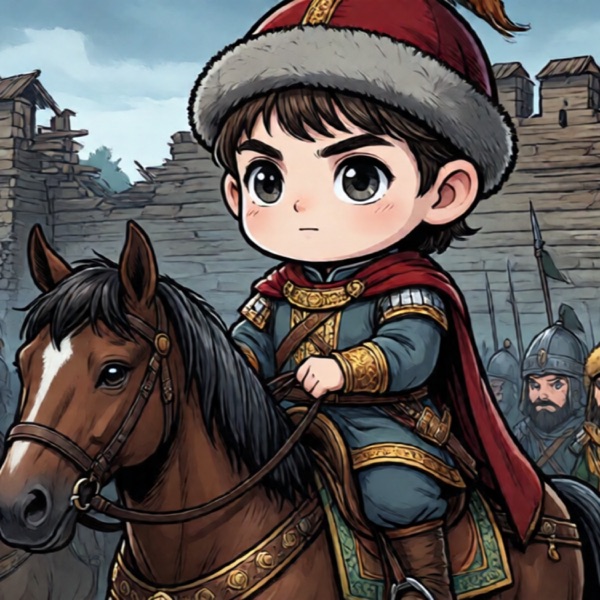
French culture and language dominated imperial Russian high society for more than a century, shaping aristocratic salons, education, fashion, diplomacy, literature, architecture, and the daily identity of nobles in Saint Petersburg and Moscow. This Francophile world both refined and divided the empire before revolution. The episode remains central to Russian history, imperial memory, and debates over power today.This video follows Peter the Great's Westernization, Empress Elizabeth's Versailles-inspired court, Catherine the Great's correspondence with Voltaire and Diderot, French tutors, governesses, theaters, fashion journals, émigrés after the French Revolution, Jesuit colleges, Odessa under Richelieu, and the bilingual world of Russian aristocracy. It also explores Napoleon's invasion, the patriotic reaction against French speech, Pushkin and Tolstoy's use of French, ballet and architecture, French loanwords in Russian, the 1917 collapse of noble society, the Russian emigration in Paris, and the lasting…
French culture and language dominated imperial Russian high society for more than a century, shaping aristocratic salons, education, fashion, diplomacy, literature, architecture, and the daily identity of nobles in Saint Petersburg and Moscow. This Francophile world both refined and divided the empire before revolution. The episode remains central to Russian history, imperial memory, and debates over power today.This video follows Peter the Great's Westernization, Empress Elizabeth's Versailles-inspired court, Catherine the Great's correspondence with Voltaire and Diderot, French tutors, governesses, theaters, fashion journals, émigrés after the French Revolution, Jesuit colleges, Odessa under Richelieu, and the bilingual world of Russian aristocracy. It also explores Napoleon's invasion, the patriotic reaction against French speech, Pushkin and Tolstoy's use of French, ballet and architecture, French loanwords in Russian, the 1917 collapse of noble society, the Russian emigration in Paris, and the lasting…
Episodios
Why Russian High Society Spoke French for More Than a Century
EscuchadoFrench culture and language dominated imperial Russian high society for more than a century, shaping aristocratic salons, education, fashion, diplomacy, literature, architecture, and the daily identity of nobles in Saint Petersburg and Moscow. This Francophile world both refined and divided the empire before revolution. The episode remains central to Russian history, imperial memory, and debates over power today.This video follows Peter the Great's Westernization, Empress Elizabeth's Versailles-inspired court, Catherine the Great's correspondence with Voltaire and Diderot, French tutors, governesses, theaters, fashion journals, émigrés after the French Revolution, Jesuit colleges, Odessa under Richelieu, and the bilingual world of Russian aristocracy. It also explores Napoleon's invasion, the patriotic reaction against French speech, Pushkin and Tolstoy's use of French, ballet and architecture, French loanwords in Russian, the 1917 collapse of noble society, the Russian emigration in Paris, and the lasting…
Why the Romanov Tercentenary Became the Last Great Imperial Celebration
EscuchadoThe Romanov Tercentenary of 1913 was a dazzling celebration of three hundred years of dynasty, yet beneath its pageantry lay hemophilia, Rasputin, political fragility, war anxiety, and an empire nearing collapse. Its splendor now reads like the twilight of imperial Russia before revolution. The episode remains central to Russian history, imperial memory, and debates over power today.This video follows the election of Mikhail Romanov in 1613, Nicholas II's sacred vision of autocracy, Alexandra and the imperial children, Alexei's hidden illness, Ivan Susanin propaganda, illuminated Saint Petersburg, medals, coins, amnesties, religious processions, Moscow and Kostroma ceremonies, the Romanov Tercentenary Egg, and the planned monument on the Volga. It also traces the tension with Rasputin, the coming World War, Nicholas's command decision, ministerial chaos, Rasputin's murder, the February Revolution, abdication in March 1917, the Ipatiev House execution, and the haunting symmetry of the dynasty's end. The…
The 1905 Revolution: The First Storm Against Russia's Last Tsar
EscuchadoThe 1905 Russian Revolution began with Bloody Sunday, when peaceful workers carrying icons and petitions marched toward the Winter Palace and were met by imperial gunfire across the snow of Saint Petersburg. The massacre broke the sacred image of the caring tsar and exposed autocracy. The episode remains central to Russian history, imperial memory, and debates over power today.This video follows industrial misery, the Russo-Japanese War, Okhrana police socialism, Father Georgy Gapon, the Putilov strike, the workers' petition, the January 22 march, the shootings near Narva Gate and Palace Square, and the collapse of the sacred bond between tsar and people. It also covers nationwide strikes, peasant unrest, the Potemkin mutiny, the Moscow uprising, Sergei Witte, the October Manifesto, the State Duma, repression after reform, and the memorials that preserve the first great revolutionary crisis of Nicholas II's reign. The events revealed how workers, soldiers, peasants, and liberals could shake autocracy…
Why Russia Lost to Japan and Triggered Revolution at Home
EscuchadoThe Russo-Japanese War shattered the illusion of Russian imperial might, exposing military weakness, logistical overreach, racial arrogance, and political paralysis while pushing the Romanov Empire toward the Revolution of 1905. It proved that empire could fail far from home and collapse politically at home afterward. The episode remains central to Russian history, imperial memory, and debates over power today.This video follows Russia's expansion into Manchuria, the Triple Intervention, Port Arthur, the Chinese Eastern Railway, the Boxer Rebellion, the Bezobrazov circle, Japan's alliance with Britain, failed diplomacy over Korea and Manchuria, and the surprise attack of February 1904. It also covers the siege of Port Arthur, Admiral Makarov, the battles of Liaoyang, Mukden, and Tsushima, the doomed Baltic Fleet voyage, Witte's diplomacy at Portsmouth, the October Manifesto, the Triple Entente, naval memorials, and the cruiser Aurora's later role in 1917. The war proved that distance, technology, leadership,…
Why Nicholas II's Coronation Began With the Khodynka Tragedy
EscuchadoNicholas II's coronation in 1896 was meant to proclaim sacred Romanov authority, but the Khodynka Field stampede killed more than a thousand people and cast a dark shadow over Russia's last tsar. The celebration became an omen of distance between ruler, bureaucracy, and ordinary people. The episode remains central to Russian history, imperial memory, and debates over power today.This video follows Nicholas's accession after Alexander III, his marriage to Alexandra, the Moscow coronation ceremonies, the Assumption Cathedral ritual, imperial regalia, foreign dignitaries, and lavish court banquets. It then explains the public feast planned at Khodynka Field, rumors about souvenir gifts, crowd panic, pits and ditches, the deadly crush, official failures, the infamous Cup of Sorrows, Nicholas's controversial attendance at the French embassy ball, public anger, revolutionary symbolism, the 1905 and 1917 crises, and the memorials that preserve the victims' memory. The tragedy exposed the distance between glittering…